Lead Generation: Build a System That Finds and Converts Prospects
By 2 Fellas Media Team · November 19, 2026 · 10 min read

Lead generation is the process of attracting potential customers or supporters, capturing a way to respond, and guiding suitable enquiries to a useful next step. For a South African business, NGO, or marketing team, a workable system connects a defined audience and relevant offer to a clear response route, responsible follow-up, and measures of progress—not just a count of names.
Table of Contents
- Define the result before choosing a channel
- Match the audience, offer, and qualification questions
- Build a route from attention to response
- Follow up, qualify, and use automation carefully
- Measure progress and protect the relationship
Define the result before choosing a channel
A lead is a person or organisation that has shown interest and provided a way to continue the conversation. That signal does not automatically mean the person is ready to buy, eligible for a service, or a good fit. The campaign’s purpose is to create relevant opportunities and help the team decide what to do with them.
Start by describing the outcome in terms the team can recognise. A business seeking website projects may want enquiries from organisations with a defined website need. An NGO may want people to register for updates about a particular campaign. A marketing team may need enquiries that can be routed to sales or a service specialist. These are distinct results; a shared target such as “more leads” does not tell the team whether the campaign is working.
Write a short definition of a useful enquiry before building the campaign. Include the audience, the requested action, the minimum information needed to respond, and the person or team responsible for the next step. For example, “a South African organisation requesting a website proposal and providing a working contact method” is more consistent to apply than “a promising prospect.” For a public-awareness campaign, the equivalent might be someone who actively registers for information, rather than anyone who viewed a social post.
Use these prompts to make the definition operational:
- Who should respond? Describe the person or organisation and any essential fit conditions, such as the issue they need help with.
- What action counts? Choose a concrete next step: request a consultation, submit a project brief, register for information, or another action the organisation can support.
- What information is necessary? Ask only for details that help assess fit, respond, or route the enquiry.
- Who owns the handover? Name a role or team, and decide where the enquiry should go.
This definition gives marketing and sales—or campaign and community teams—a shared basis for judging results. It also prevents a form submission from being treated as proof of buying intent. A person may be exploring options, asking on behalf of someone else, or looking for information rather than a sales conversation.
Match the audience, offer, and qualification questions
People are more likely to respond when a campaign speaks to a recognisable need and explains what will happen next. A general “get in touch” message can work when the organisation is already familiar to its audience. Where it is not, make the value of responding clear: a project-scoping conversation, a useful guide, or registration for a relevant event. The offer should be specific enough to set expectations and something the organisation can actually deliver.
Ask questions that change the next step
Qualification is not a contest to collect the most information. Its purpose is to distinguish between enquiries that need different responses. A web-development firm might ask what kind of website support is needed; an NGO might ask which campaign topic someone wants to hear about. In either case, a question is useful when its answer affects routing, follow-up, or a decision.
Keep essential details distinct from useful context. A contact method and the subject of the enquiry may be necessary to respond. Other information—such as budget, timing, or organisation size—may help in some situations, but asking for it too early can make a form harder to complete. Make each question earn its place by identifying what the team will do differently with the answer.
Before publishing, check that the audience, promise, form, and handover agree:
- Audience: Does the message speak to people the organisation can serve or inform?
- Promise: Does the offer accurately describe what follows a response?
- Effort: Is the information requested proportionate to the action being offered?
- Routing: Can the team tell who should receive the enquiry and what to do next?
A broad offer may attract a wider range of responses, while a more specific offer may help people judge whether it suits them. Neither is automatically better: the right choice depends on the campaign’s goal and the team’s capacity to handle responses. If a campaign produces many enquiries that do not fit, review the message and audience before adding more questions to the form.
Build a route from attention to response
A lead-generation route connects the moment someone encounters a message to the action they take and the follow-up that comes after. It can involve a website, paid media, public relations, events, direct outreach, or several channels. Choose based on where the intended audience may encounter the message and what action that channel can reasonably support. A channel is only one part of the route: an ad without a relevant destination, or an outreach message without a clear reason to reply, leaves the prospect to work out what to do.
Give each channel a clear job
Search advertising can address people looking for a solution; social content or video can introduce an issue or explain an offer; PR can bring attention to a story; and direct outreach can start a targeted conversation. The choice should follow the audience and action, not a desire to use every available format. A video may help explain a complex service, for instance, but viewers still need a clear destination if they want to enquire. A landing page can explain an offer and collect details, but it cannot make an irrelevant offer compelling.
Google Ads describes lead form assets as a way for people to submit information from an ad; its lead form asset guidance sets out the format and requirements. A form within an ad may reduce steps for a prospect, but the organisation still needs to decide which details to request, where enquiries go, and who responds.
Map the route in plain language before committing time or spend:
- Attention: The person encounters a message relevant to a need or interest.
- Consideration: A page, conversation, or piece of content explains the offer and who it suits.
- Response: The person takes a defined action, such as completing a form or requesting contact.
- Handover: The enquiry reaches an accountable person with enough context to respond appropriately.
Check that the route works from the prospect’s perspective. Follow the campaign link and confirm that the destination matches the message. Where appropriate, submit a test enquiry and check that it reaches the assigned person with the expected information. This verifies the handover, not the campaign’s likely performance. If the process loses enquiries, increasing attention may simply create more opportunities that go unanswered.
For teams planning several creative or campaign elements, the 2 Fellas Media portfolio offers examples of the agency’s work to review when considering execution. A portfolio can help a team assess creative work, but the campaign route still needs to be designed around its own audience, offer, and follow-up capacity.
Follow up, qualify, and use automation carefully
After an enquiry arrives, respond in a way that reflects the person’s stated interest. Separate acknowledging the enquiry from deciding whether it is sales-ready: first confirm receipt and the requested next step, then assess fit. A form submission is a reason to handle the enquiry as described, not evidence that the person is ready to buy or wants unrelated messages indefinitely.
Set a follow-up policy the team can maintain. Decide who owns new enquiries, how they are assigned, what information is recorded, and how to close the loop when someone is not a fit. A small team might, as a starting policy, review new enquiries at a regular daily handover. That is an illustrative operating choice, not a universal response-time benchmark; the appropriate cadence depends on capacity and any timing the organisation has promised.
A simple process can make ownership visible:
- Confirm receipt and restate the action the person requested.
- Ask only for missing information needed to assess fit or route the enquiry.
- Offer a relevant next step, such as a conversation or a request for a project brief.
- Record the outcome as progressing, awaiting a response, not a fit, or closed.
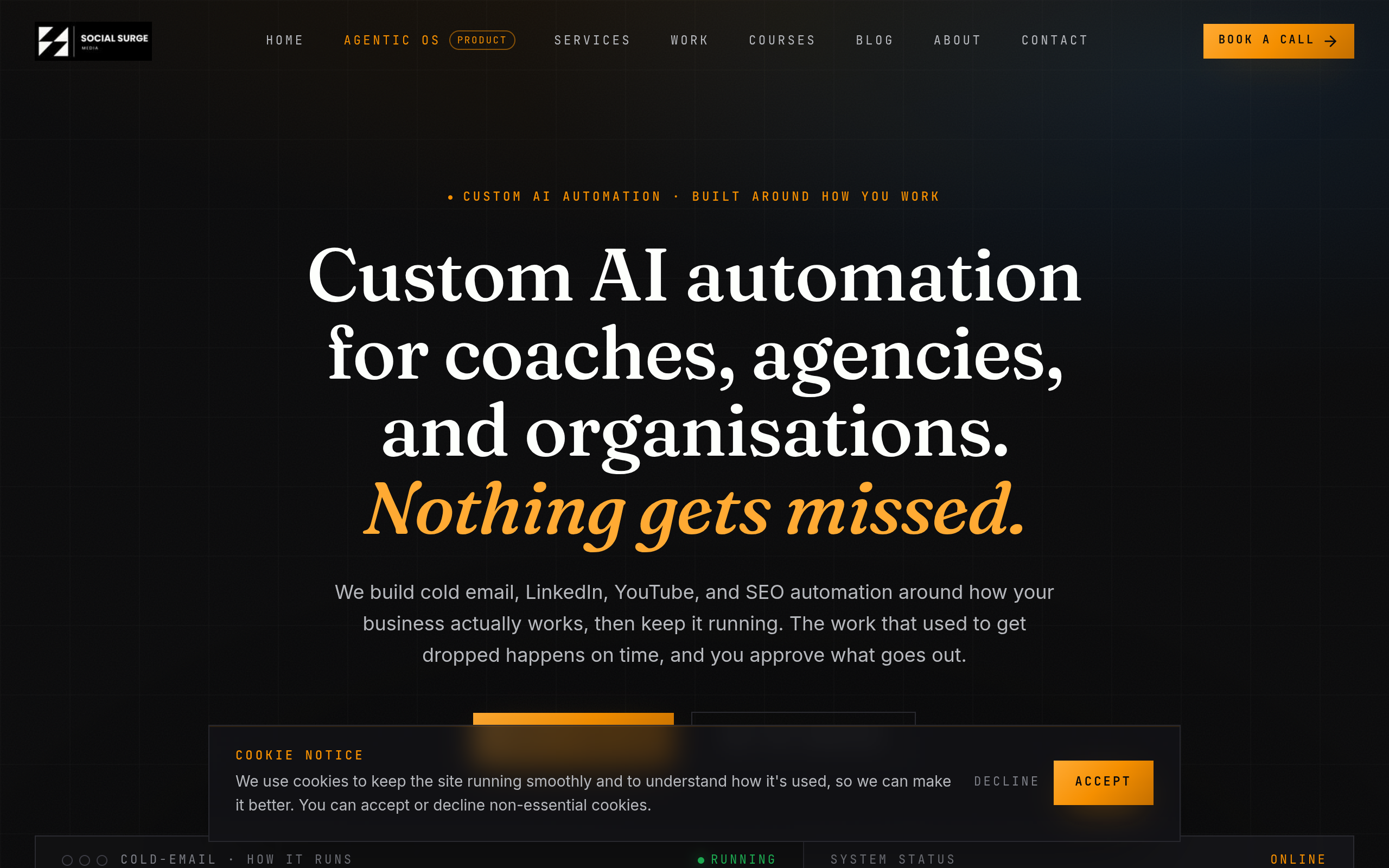
Automation may help with repetitive research, sorting, or drafting, but it does not remove the need for clear criteria and a responsible owner. For teams considering an automated workflow, automated lead research and follow-up can help frame how prospect research and fit scoring feed into cold-email follow-up. The team still needs to decide how it will check matches, review messages, monitor replies, and stop outreach when someone responds or asks not to be contacted.
Before automating, agree on what a good match looks like and what happens when the system is uncertain. Keep a way for a person to correct a poor match before a message goes out where judgement matters. Check whether the source information is suitable for the intended use, and assign someone to monitor errors and replies. An automated sequence that continues after a prospect has responded is a broken handover, not a successful follow-up process.
Measure progress and protect the relationship
Enquiry volume is a useful starting point, but it does not show whether the process is producing worthwhile outcomes. Pair it with measures of fit, contactability, completed follow-up, progression to a conversation or proposal, and eventual results where they can be attributed responsibly. A smaller number of suitable enquiries may be more useful than a larger number of mismatched submissions, but the organisation should judge that using its own outcomes rather than assuming volume or quality in advance.
Define measures so different team members record them consistently. “Qualified” should mean that an enquiry meets the agreed criteria; “contacted” should mean that follow-up was actually made. Google explains how Google Ads conversion tracking can record actions that matter to an advertiser. Before using conversion tracking, decide which actions represent meaningful progress and check that the setup measures those actions rather than treating every page view or button interaction as success.
Use a regular review to identify where the route needs attention:
- Fit: Do the enquiries match the stated audience and qualification rules?
- Handling: Are records assigned and followed up, or are some left without an owner?
- Progress: Where do people stop—after the form, before a conversation, or at a later agreed stage?
- Next change: Which single part of the route should be adjusted so its effect is easier to interpret?
If enquiries fit but do not progress, inspect the follow-up and the next step offered. If they are consistently unsuitable, revisit the audience and message before adding form fields or increasing spend. Changing one part of the route at a time can make it easier to understand what changed; changing the channel, offer, form, and follow-up together makes the result harder to diagnose.
Collecting contact details also creates responsibilities. Explain what information is collected and why, keep access and retention proportionate to that purpose, and make follow-up consistent with what people were told. South African organisations can consult the official Protection of Personal Information Act text as a starting point for understanding the law; a campaign’s specific obligations may need appropriate advice.
Rules can also vary with recipients’ locations and the channel used. The US Federal Trade Commission’s CAN-SPAM compliance guide explains requirements for commercial email in the United States. If a campaign reaches people in another jurisdiction, check the applicable rules rather than assuming one process covers every audience. Make sure consent, contact preferences, and suppression requests are not lost when information moves between a form, a CRM, and an outreach workflow.
For a practical starting point, document one audience, one offer, one conversion action, and one follow-up owner. Build the simplest route that can deliver that action, then review whether enquiries fit and progress before adding channels or automation. 2 Fellas Media works across brand strategy, video production, web development, campaigns, media placement, PR, and lead-generation automation; if you need help shaping a route across those areas, 2 Fellas Media is a relevant next step.
Authored with NotFair SEO
- lead generation
- marketing strategy
- sales
- campaign measurement
- automation